 EN
EN

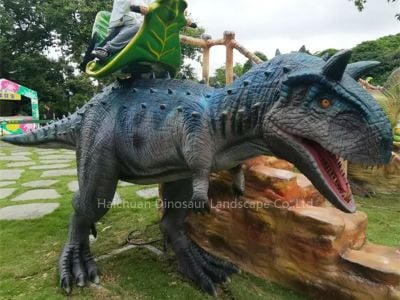
It is thrilling to create an incredible Animatronic dinosaur. At Haichuan, we specialize in creating realistic looking machines that move like real dinosaur. One critical component of these Animatronics is motors. Motors move the dinosaur's limbs, tail, and head. A motor choice must be made carefully since it is what dictates the accuracy and fluidity of the movement. When selecting a motor we consider its torque and the accuracy with which it can execute movements. These features allow Animatronic dinosaurs to mimic the actions of their real-life counterparts, exciting onlookers. Factors such as speed, torque, and motor size, have pros and cons. This article discusses the most ideal types of motors for custom Animatronic dinosaurs, why precise motors are critical to this technology, and how to find, and care for them
What Best Motor Types for Custom Animatronic Dinos
There are a few primary types of motors for Animatronic dinosaurs that are suitable for varying motions: servo motors, stepper motors, and brushed or brushless DC motors. Servo motors are commonly used because of the accuracy and range they provide. These motors can be set to hold a specific angle precisely. Servo motors are useful when creating a dinosaur with a slowly lifting leg or moving head that stays still. Stepper motors are great for creating continuous motion. They can produce controlled increments of movement and are therefore suitable for motions that require fine tuning, such as walking, creating a more realistic appearance. Brushed and brushless DC motors are cheaper than servos and steppers, and simpler. However, brushed DC motors can wear out easily due to friction, whereas brushless ones last much longer due to the absence of friction. They are efficient and suitable for large Animatronics that require consistent motion without break down. For best results, the types of motions a dinosaur will perform, along with how realistically these motions need to appear, are considered when selecting motors. Larger dinosaurs will require larger motors in terms of size, but size is not necessarily an indicator of power. When selecting motors, the HAICHUAN company takes several elements of each motion into account

What Make High-Precision Motors Essential for Custom Animatronics
High precision motors are essential for Animatronics. They are capable of creating accurate and controlled movements. This is essential when building lifelike dinosaurs. If a dinosaur's tail doesn't sway at the correct angle and speed it's appearance becomes less realistic. High-precision motors eliminate jerky movements that will break a spectator's illusion. They allow the Animatronic to create realistic and fluid movements. Not only are high precision motors needed for movements like lifting the dinosaurs legs or the swinging tail, but they also aid in more complex actions like mimicking a dinosaurs breath or its reactive behaviors. For example, when an Animatronic dinosaur is startled and its head whips around to identify the cause it requires high-precision motors in order to do so convincingly like its real-life counterpart. HAICHUAN believes these types of motors are crucial to a convincing Animatronic display
How Optimize Motor Performance for Real Animatronic Movments
When constructing Animatronic dinosaurs it is important that all of the motors function efficiently. This includes choosing appropriate motor types for different movements; servo motors are excellent for precision, whereas steppers provide smooth, smaller motions. Once the motor is selected, calibration is critical; the user has to calibrate the motors, by using a computer program, in order to get precise movement angles and speed from each individual motor. Adequate power supply is crucial. Motors will move slowly and not as accurately as possible without sufficient amperage or wattage. Power is usually provided by a battery pack or an adapter that matches the specifications for the motors being used. Gears and linkages must be well placed, aligned, and lubricated so that friction does not cause loss of motor strength or reduce fluidity of motion. Test thoroughly and continuously, observing the dinosaurs movements at all angles, until a desired and lifelike appearance is achieved

Where Source Quality Motors for Animatronic Dinos
Many different types of websites sell Animatronic and robotics-specific motors online. Ensure when buying, you research reviews and verify that the specifications you're looking for are met, such as lift strength and speed. Purchasing from local electronics stores can be very helpful for asking advice and examining the motors visually prior to buying. It can be possible to save money by purchasing used motors through sites like eBay or other classifieds websites. Be sure to thoroughly inspect any used motors before committing to a purchase. Participating in Animatronics and robotics forums can also yield good recommendations for suppliers of quality motors. Price is an important factor, though it's often best to invest more upfront on quality motors for longevity and superior performance. A high-quality motor will significantly impact the dinosaurs performance
How Troubleshoot Common Motor Issues in Animatronic
Motor problems can occur in Animatronic dinosaurs. To start the troubleshooting process, consider common causes of non-operation. If a motor isn't working, first make sure there is sufficient power; check batteries and that adapter plugs are secured properly. If the motor still isn't working, double-check all connections between the motor, its power source, and any control unit; ensuring there are no loose wires will ensure the power source is fully connected. If a motor moves weakly or slowly, you can assume it's either because the task requires too much from the motor or the gears/linkages are obstructed. Trying a motor with more torque can solve weak movement problems, whereas clearing any obstruction will alleviate the second issue. If a motor begins to emit a strange sound (such as, Clicking, grinding, or squealing), immediately stop operation as this indicates a serious problem with the motors gears or internals; double check the alignment of gears or clear any obstructions from the gears/blockage. If problems persist it may be time to consider replacing the motor. It can be helpful to keep a log of problems and the solutions that were found, for future reference. Patience and thorough inspection will ensure the animals continue to work at there best